ZGCTA Activities
ZGCTA "Voice of Think Tanks" Series Event: Low-Altitude Economy Technology Thematic Online Sharing Hosted by South China Regional Innovation Center Successfully Held
Date:2026-07-02 15:29
On June 30, the "Voice of Think Tanks" series event of the ZGC Global High-Level Think Tank Alliance (ZGCTA) — the Low-Altitude Economy Technology Thematic Online Sharing Session hosted by the South China Regional Innovation Center — was successfully held. With the theme of The Low-Altitude Economy Industry Against the Backdrop of the Domestic-International Dual Circulation: Logic, Opportunities and Challenges, the event carried out in-depth exchanges via a cloud-based platform.
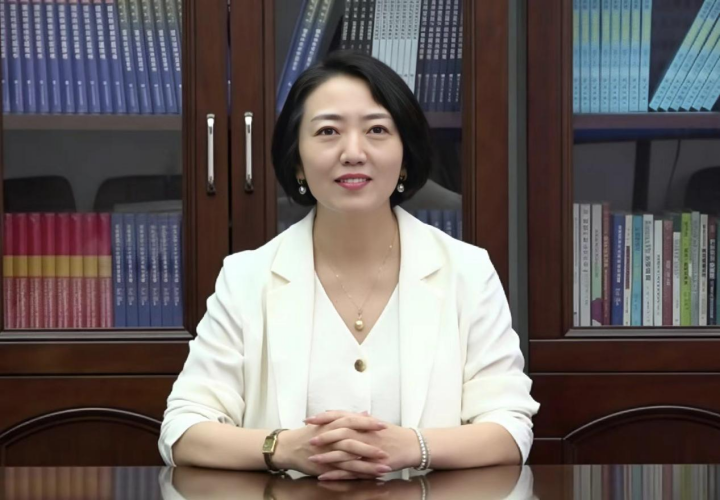
Remarks by Li Junkai
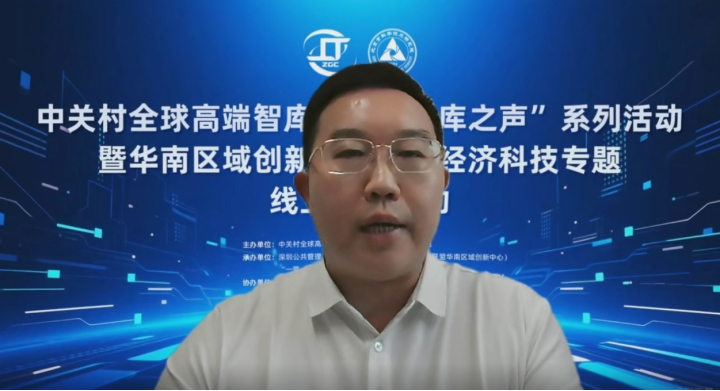
Remarks by Fu Guanda
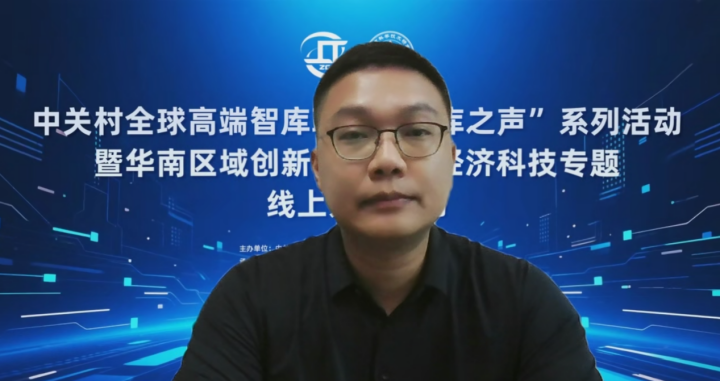
Moderated by Xian Jun

Thematic Sharing by Lai Mingming
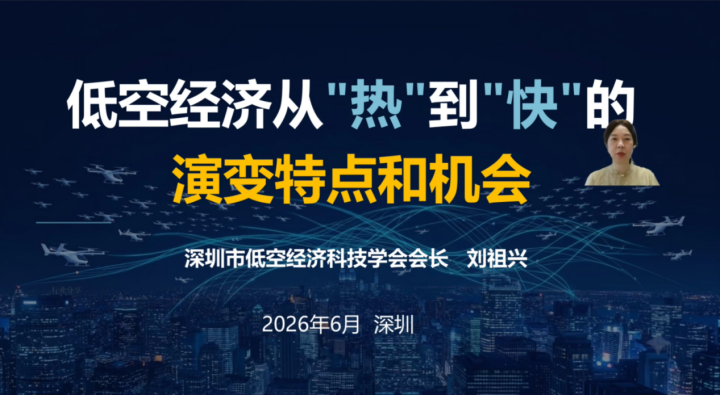
Thematic Sharing by Liu Zuxing
This event was co-hosted by ZGCTA and the Beijing Academy of Science and Technology (BJAST). It was organized by the Shenzhen Education and Training Institute of Public Administration (ZGCTA South China Regional Innovation Center) and the Training Center for “Belt and Road” International Sci-Tech Cooperation, with the support of the Shenzhen Science and Technology Association for Low-altitude Economy. Li Junkai, Secretary-General of ZGCTA and Director of the Center for International and Regional Cooperation at BJAST, and Fu Guanda, President of the Shenzhen Education and Training Institute of Public Administration and Director of ZGCTA South China Regional Innovation Center, delivered opening remarks. Xian Jun, Executive Director of the Chinese Modernization Research Center at the Shenzhen Education and Training Institute of Public Administration and Deputy Director of ZGCTA South China Regional Innovation Center, moderated the event. The event consisted of opening remarks, thematic sharing and future outlook sessions. It was broadcast live via the WeChat Channels of three organizations: ZGCTA, the Shenzhen Education and Training Institute of Public Administration, and the Shenzhen Science and Technology Association for Low-altitude Economy. It attracted over 600 online participants, including representatives of ZGCTA member institutions, practitioners in the low-altitude economy sector, and representatives of science and technology enterprises and public institutions.
In her remarks, Li Junkai stated that this event is a vivid practice for ZGCTA to thoroughly implement the innovation-driven development strategy and support the development of the new development paradigm featuring dual domestic and international circulation. It is also an important initiative to connect the two major innovation highlands of the Beijing-Tianjin-Hebei region and the Guangdong-Hong Kong-Macao Greater Bay Area, and empower the high-quality development of emerging industries with high-level think tank resources. She noted that the low-altitude economy is a key national priority for fostering new economic growth poles. The Guangdong-Hong Kong-Macao Greater Bay Area, especially Shenzhen, boasts a complete industrial ecosystem, diverse application scenarios and pioneering experience in institutional exploration in this field. Going forward, ZGCTA will continue to polish and strengthen the "Voice of Think Tanks" brand, build more high-level and professional platforms for exchange and cooperation, support the development of the South China Regional Innovation Center, and facilitate in-depth alignment of high-level expert resources and cutting-edge research outcomes with industrial demands in the Greater Bay Area. It will work with all parties to contribute think tank strength to supporting high-level self-reliance and self-improvement in science and technology and accelerating China's development into a leading country in science and technology.
In his remarks, Fu Guanda expressed gratitude for the trust and recognition from ZGCTA. He introduced that the Shenzhen Education and Training Institute of Public Administration is a new-type cadre academy and modern cutting-edge high-level think tank integrating cadre education, talent training and policy consultation research. It was officially inaugurated as one of the first batch of ZGCTA South China Regional Innovation Centers at the ZGC Forum in March this year. Taking scientific and technological innovation and industrial innovation in the Guangdong-Hong Kong-Macao Greater Bay Area as the fulcrum, it will radiate China's innovation momentum to the world. He pointed out that this year marks the first year of the 15th Five-Year Plan period, and the low-altitude economy has become a strategic emerging pillar industry. South China is a global highland for low-altitude aircraft manufacturing, integration and export, and Shenzhen is accelerating the large-scale and mature development of the low-altitude economy industry. The institute has long been deeply engaged in research on the low-altitude economy industry and simultaneously cultivates professional management talents in this field.
During the thematic sharing session, Prof. Lai Mingming from the Shenzhen Education and Training Institute of Public Administration delivered a sharing themed Quality Route and International Perspective of China's Emerging Pillar Industries: Taking the Low-Altitude Economy as a Representative. He clearly defined the development boundaries and core characteristics of emerging pillar industries and future industries, and in-depth analyzed practical bottlenecks faced by the low-altitude economy, such as imbalance between input and output, constraints of airspace regulations, and fragmentation of cross-border rules in the Guangdong-Hong Kong-Macao Greater Bay Area. He also compared the differences in development models among China, the United States and Europe, and proposed the development principle of government leadership and collaboration among market entities, as well as implementation paths including coordinating scale expansion and efficiency improvement, and extending and supplementing the industrial chain by connecting with traditional industries.
Liu Zuxing, President of Shenzhen Science and Technology Association for Low-altitude Economy and Deputy Director of the Digital Low-Altitude Specialized Committee of Guangdong Institute of Communications, delivered a speech themed Evolution Characteristics and Opportunities of the Low-Altitude Economy: From Hype to Rapid Development. She systematically sorted out the evolution of the low-altitude economy from a buzzword concept to a pillar industry, and interpreted the "five-dimensional driving" logic covering technology, policy, demand, scenarios and capital. She presented a full picture of the entire industrial chain and diverse application scenarios such as power inspection, low-altitude logistics, emergency rescue, agricultural and forestry plant protection, and cultural tourism consumption. She also proposed that the industry needs to break through the "three barriers" of institution, technology and business models, and upgrade towards intelligence, scale, standardization and digitalization.
Going forward, ZGCTA will hold a series of important online and offline events to continuously enrich its brand activity matrix. It will steadily advance a number of key exchange activities, including the ZGCTA Director Meeting, APEC Training on Enhancement of Digital Literacy and Skills for APEC Women, and the "Voice of Think Tanks" series of activities in the digital economy field.
This event has effectively deepened cross-regional think tank linkage and industrial exchanges between the Beijing-Tianjin-Hebei region and the Guangdong-Hong Kong-Macao Greater Bay Area, and built a high-quality platform for idea exchange and resource matching in the low-altitude economy sector. Looking ahead, ZGCTA will continue to leverage the layout of regional innovation centers, focus on strategic emerging industries to plan a series of brand activities, promote the implementation and transformation of think tank research outcomes, and continuously empower the high-quality development of China's emerging industries.
(Text/Photo by ZGCTA Secretariat Office)
